Analytics team
Inherited
A design-system hub inside one Google organization — a governed home for design knowledge, built when there was nothing off the shelf to buy.
Design systems fail quietly: not when the components are wrong, but when nobody can find what's true anymore.
Google's ads and analytics organization: 50+ teams, 700+ UX practitioners. I ran a 1,600-page audit of its patterns and found 19 separate spec sites carrying 10+ different buttons, 3+ chips, 7+ callouts, and 5+ text fields — most of them unintentional. Information architecture changed team to team. Specs went stale the day they shipped. The org didn't lack components; it lacked a single place where design knowledge lived, stayed current, and could be trusted.
In late 2017 I proposed and prototyped the spec-site concept that grew into Carbon, a design-system management platform for the ads and analytics UX organization — and designed the features that shipped: roles and permissions, project settings, onboarding, and usage analytics. Underneath it sat Blox, the atomic design system I co-invented, where components lived as structured data in Sketch — the only design tool at the time whose file format was honest JSON, which meant design could be data. My other contribution was the documentation discipline itself: every feature shipped with a CUJ, a system diagram, error states, redlines, and accessibility greenlines.
Inheritance in a design-system hub
Use one primary action per view.
Inherited
Inherited
Inherited
Local note: on dense tables, pair with a text button rather than a second primary.
Three team sites, all inheriting one component.
The teams never copied anything. That's the point — inheritance means there's nothing to keep in sync.
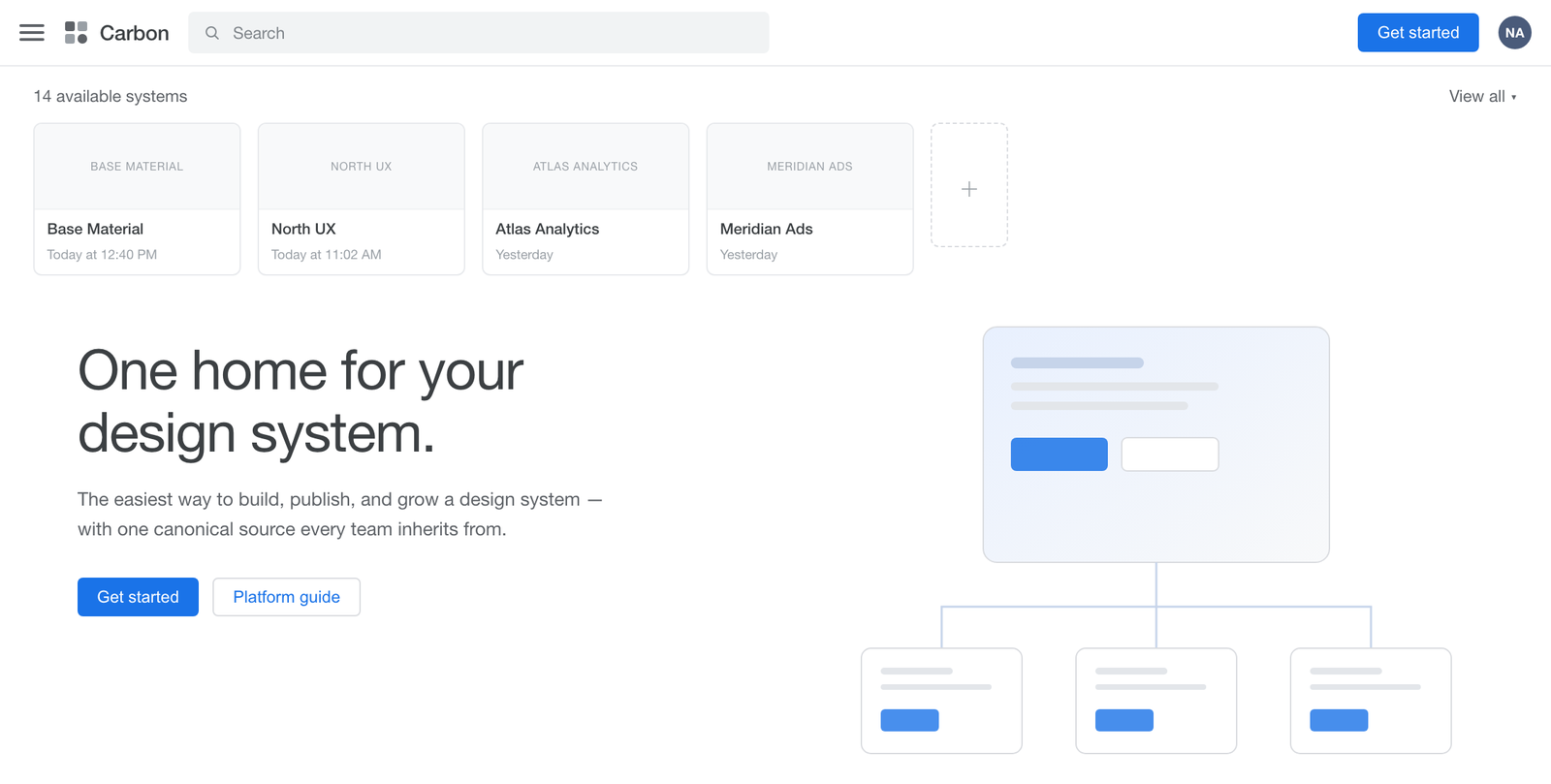
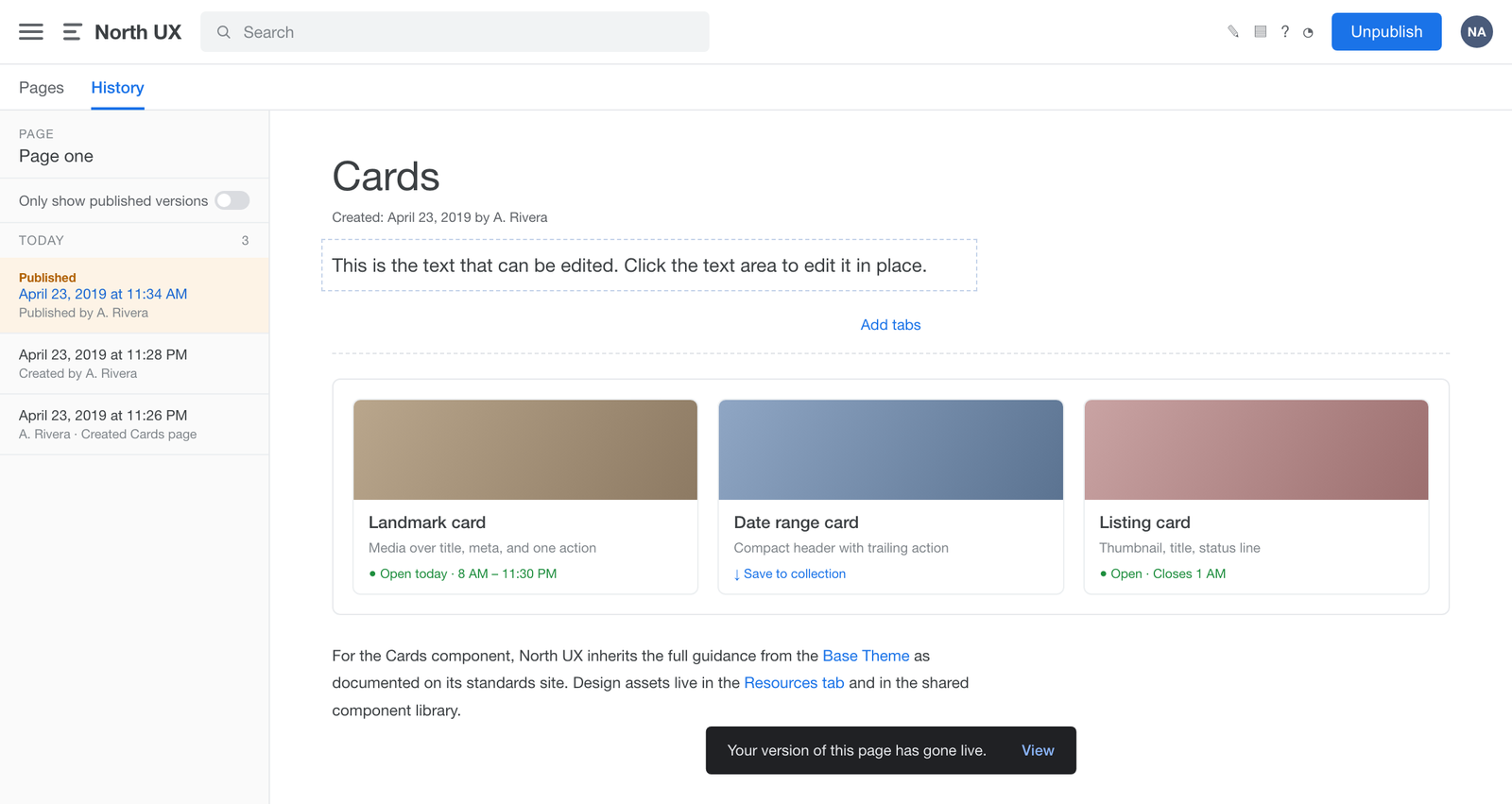
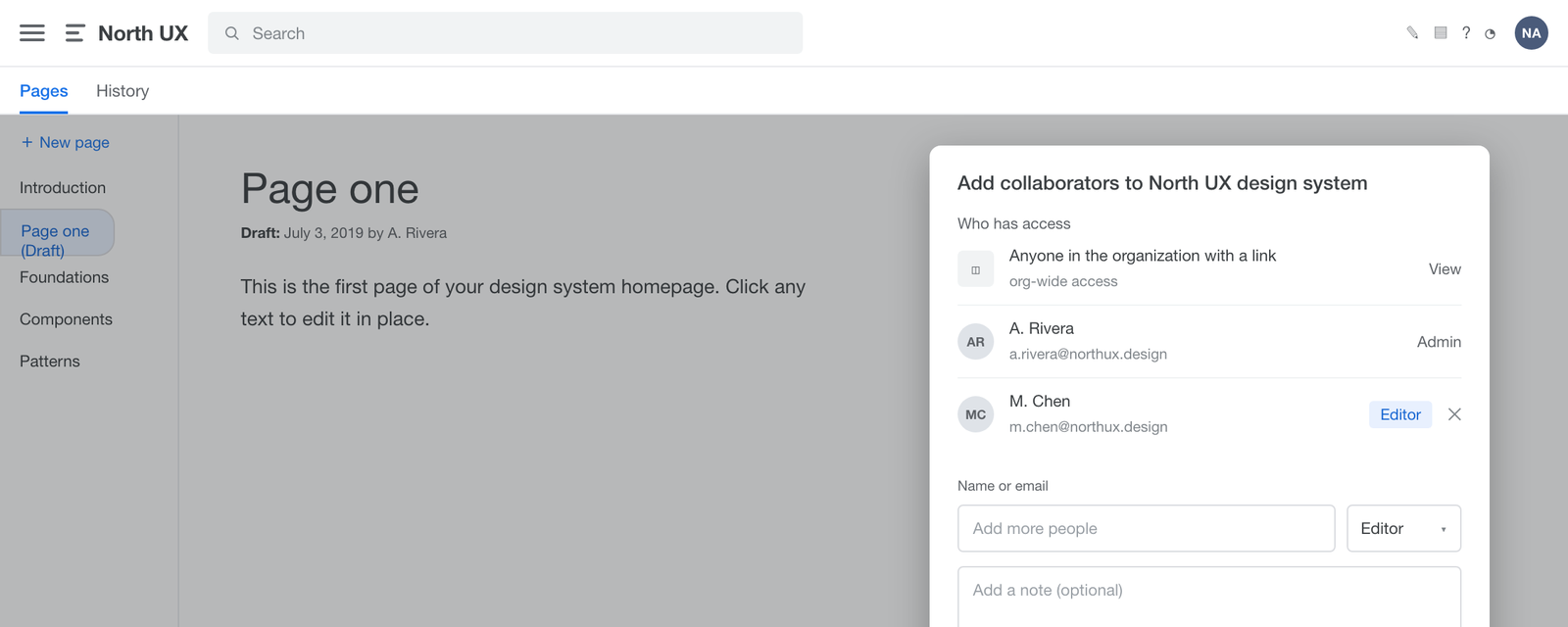
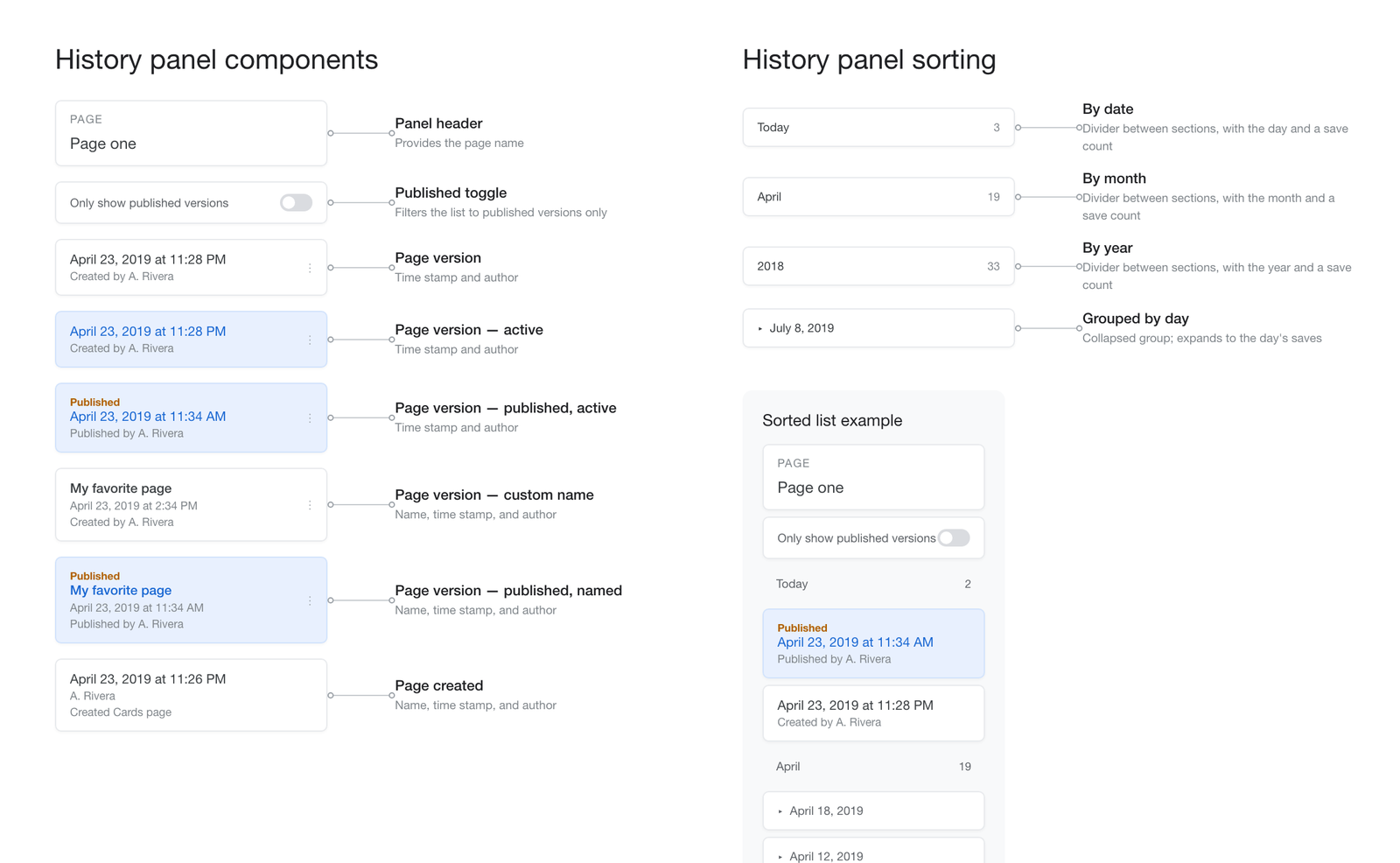
Carbon was a hub of hubs — at alpha it hosted fourteen design systems, each a home for its own org. The mechanism that made it work was inheritance: a team's spec site consumed templates from its parent system, so Google Analytics' UX teams all drew from one canonical source while other organizations ran their own. A child site could shape its own content — one group could document a dropdown for their context, another for theirs — but the component underneath stayed canonical. Editing was inline, click-to-edit under roles and permissions, with drafts, a publish gate, and full version history. Commenting was built in with mentions and notifications, and it quietly became something else: an intake channel, where a designer's note on a component page turned into the system team's queue.
Each component page carried the whole truth in tabs — specs, states, motion, accessibility, and an API tab with a live playground where you could change a component's values and watch it respond, backed by code snippets from a sister React Native library so engineers pulled working code instead of screenshots. Around the hub sat a constellation of connected tools: a cloud component repository, WordFlow for managing strings against an archive of already-approved language, a searchable research hub spanning studies across the org, and a measure tool that generated specs from any design you gave it.
A platform, not a mandate. The safe institutional move was top-down: one blessed site, mandatory adoption, compliance by decree. I'd watched that fail — mandates produce workarounds, and workarounds had produced the 10 buttons. So the line was drawn differently: strict where truth lives, free where teams live. Canonical components could not fork; everything around them — templates, local usage notes, team content — belonged to the teams. Adoption had to come by pull. It did: teams requested access faster than the platform could onboard them.
Carbon reached alpha in December 2018. Eighteen partner teams had come on board, and 28 UX teams were already developing their specs in it before launch. Analytics — built on the platform's own tracking integration — showed 3,000 users, 11,000 sessions and 95,000 page views a month, with an average session of 8.33 minutes. That last number is the one I watched: nobody spends eight minutes in a reference. They were working in it.
Seven years later, I'm building the same conviction again for the AI era. Component Studio, in the Independent Lab, makes the canonical record machine-readable — so the "plugins" this time are agents, and the source of truth is something both people and AI can consume without either owning it.